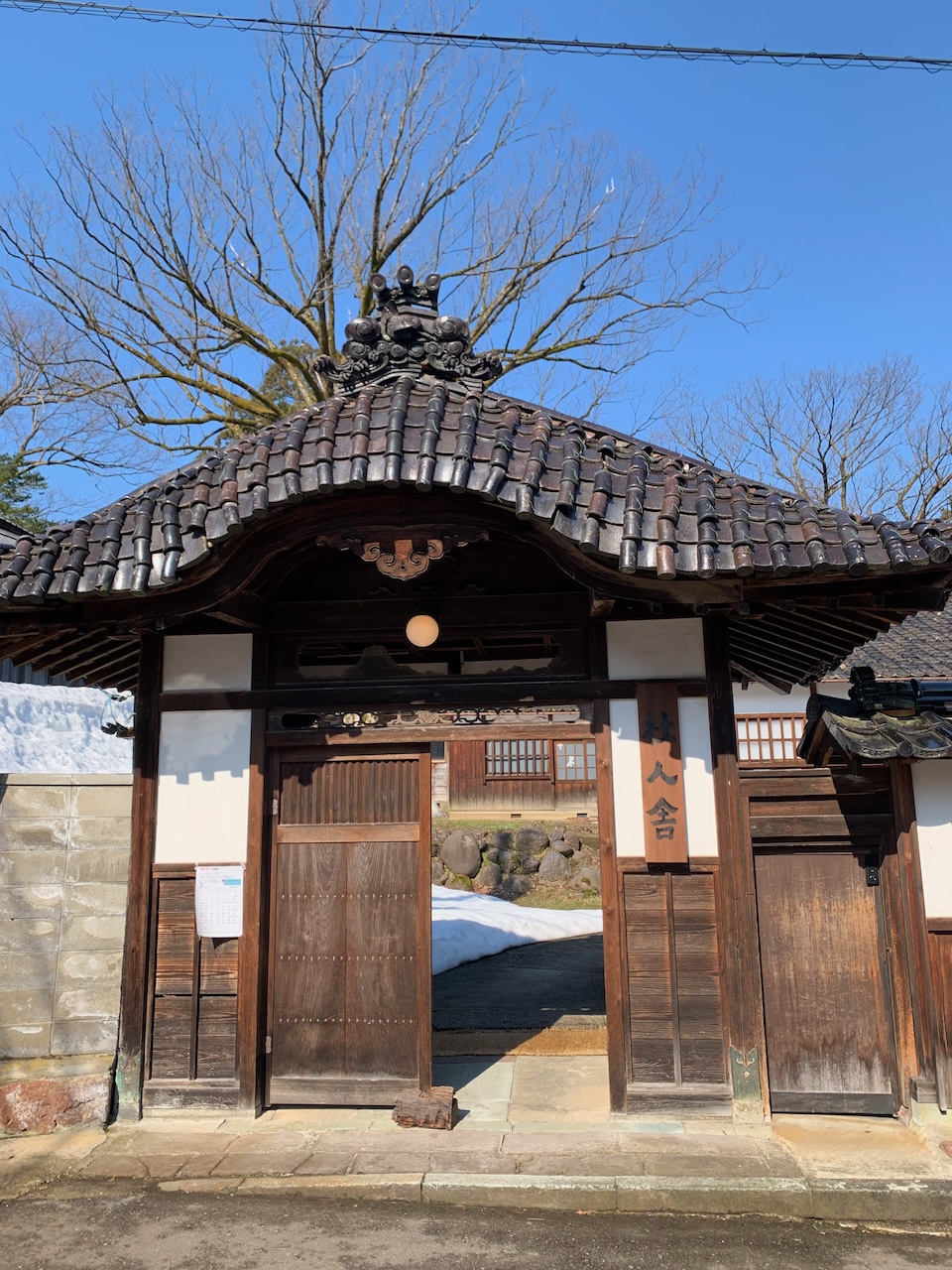
As far as people remember about 40 migratory birds have come to form couples and reside during spring to autumn in the branches of the huge 400-year old zelkova tree rising from the yard of the old training centre of Zentokuji Temple.
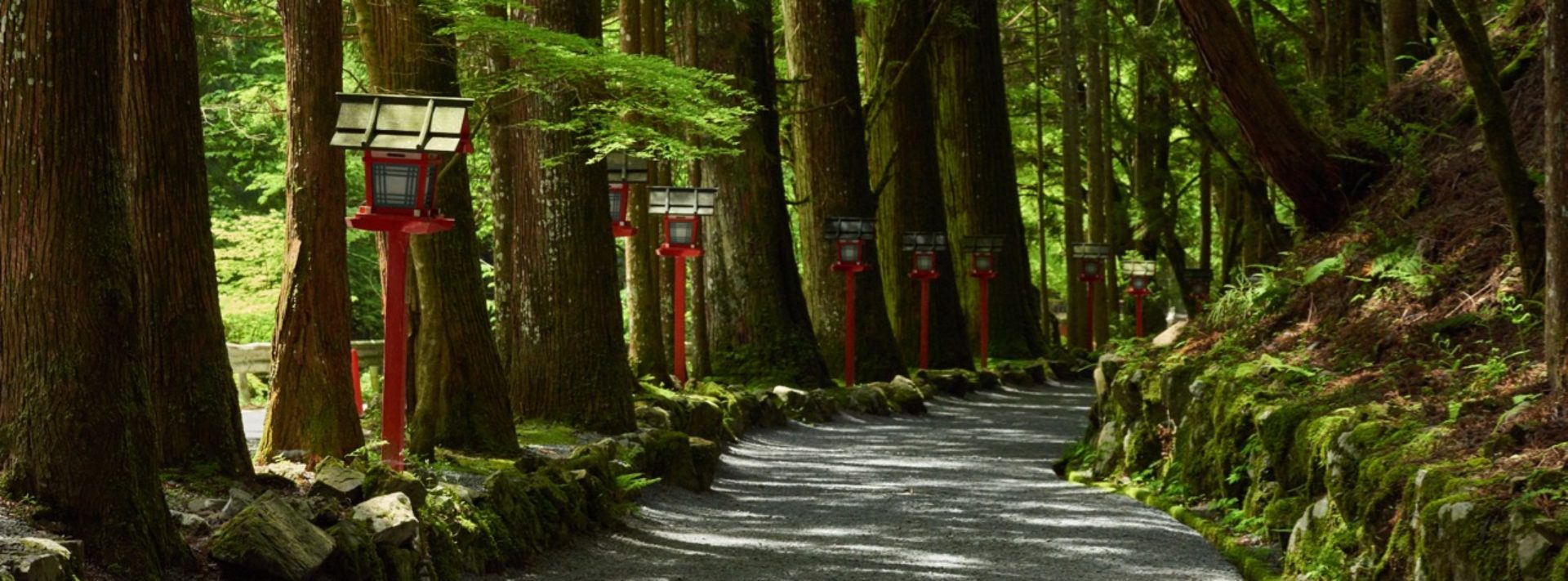
Located in Johana at the Southern end of the Toyama plain, in a region which created wealth thanks to the bounty of Nature and talented craftspeople (wood turning, silk weaving …), Zentokuji is rich with more than 10,000 spiritual and other cultural treasures that attracted and inspired devout philosopher and collector Soetsu Yanagi (1889-1961) who stayed for a long retreat. There he refined some of the principles of the hugely important Mingei (folk crafts movement) he gave birth to in the 1920s. Zentokuji is one of the rare temples still holding a public service and sermon for the local community every morning (and afternoon) without exceptions.
Spring was approaching on the beautiful day of our visit, and some large birds (crane like?) had just started to build their nests in nearby trees. One could easily not see that dark clouds have actually been hanging over the old Zelkova. As a hint there were only 4 elderlies at the morning service, fewer than the number of monks. More importantly, since Covid, the temple has been holding fewer funerals, and far smaller funerals than before. They are an essential source of income for monks and to maintain this huge complex.
Local entrepreneurs passionate about their region proposed to rent the training centre to create stable revenues for the temple, renovated it without transforming its architecture and turned it into a simple but at the same time exquisite small hostel where one is plunged in Mingei and invited to visit Zentokuji (as well the town) to feel the spiritual energy of the place.
I often say tourism is the best chance of Japanese countryside, but not every project will contribute as meaningfully. I fell under the spell and am simply thankful that we can enjoy all this. I wish every success to Moritosha.
PS: the local karaoke snack-bar across the road plunges you back to Showa times and is a must! Anyone will feel welcome, although being able and willing to communicate with the Toyama accent helps 🙂